

Earth (60)
Planet Earth, the only speck in the Universe confirmed by humans to have evolved higher forms of life. Watch NASA's phenomenal movie summarizing Life on Earth.
Children categories
Brutal Hurricane Ian was just one of budding global weather emergencies at the time
Written by Mathew Barlow and Suzana J. Camargo Catastrophic damage to the Sanibel Island Causeway is shown in this NOAA overflight after Hurricane Ian absolutely demolished most of Fort Myers Beach, Florida.
Evidence mounts that climate change is creating monster storms as death toll climbs in Ian’s wake
This story was originally published by The Conversation.
FORT MYERS BEACH — When Hurricane Ian hit Florida and killed at least 100 people, it was one of the United States’s most powerful hurricanes on record, and it followed a two-week string of massive, devastating storms around the world.
A few days earlier in the Philippines, Typhoon Noru gave new meaning to rapid intensification when it blew up from a tropical storm with 50 mph winds to a Category 5 monster with 155 mph winds the next day. Hurricane Fiona flooded Puerto Rico, then became Canada’s most intense storm on record. Typhoon Merbok gained strength over a warm Pacific Ocean and tore up over 1,000 miles of the Alaska coast.
- hurricane ian
- hurricane climate change
- climate change
- fort myers beach
- does climate change make hurricane worse?
- typhoon noru
- typhoon merbok
- alaska typhoon
- the conversation
- matthew barlow
- suzana camargo
- storm surge
- hurricane research
- climate change research
- monster storm
- attribution study
- storm severity
- storm frequency
- wind speed
- rain intensity
- storm intensification
- probability
- theory
- historical data
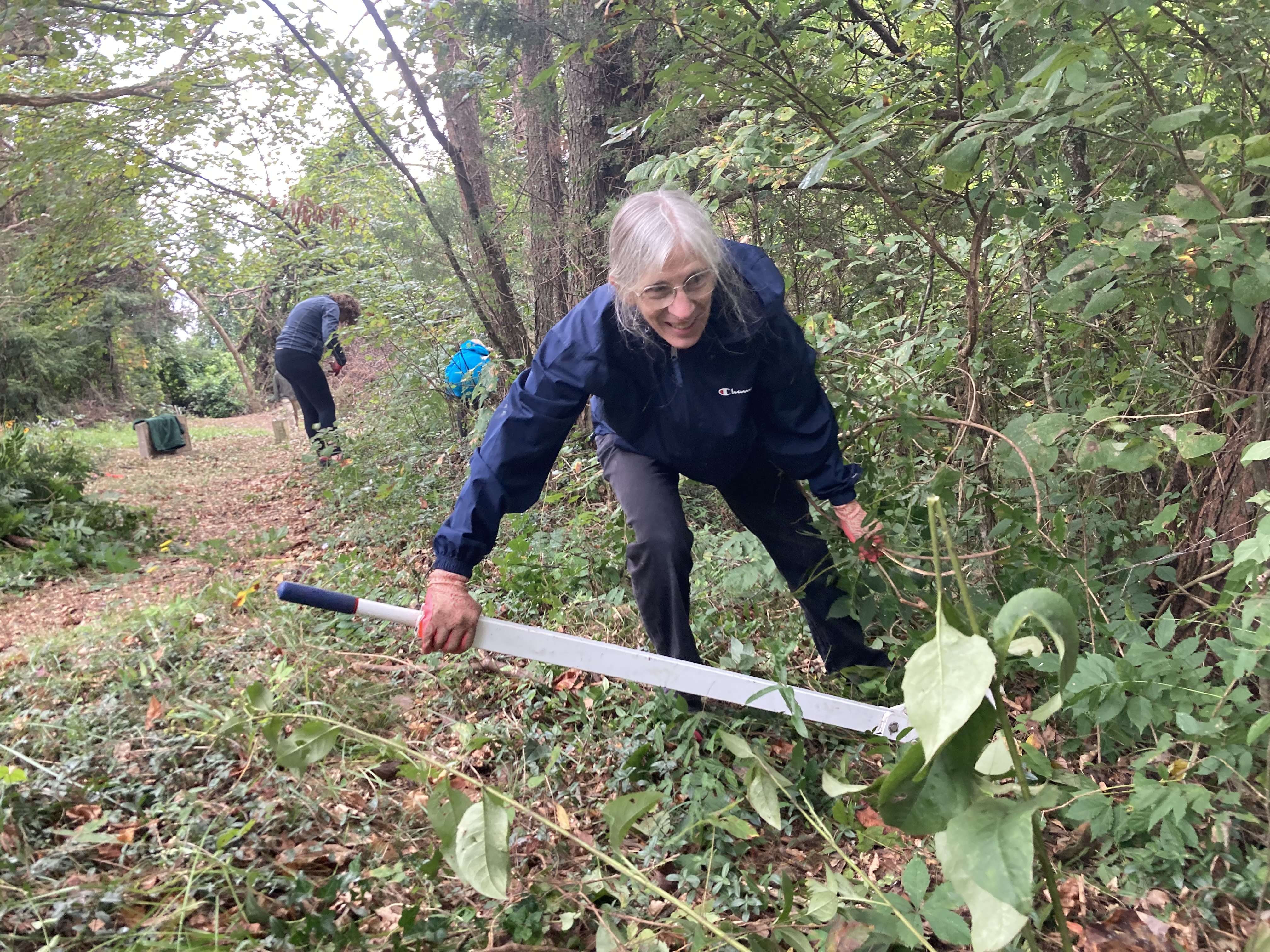 Anne Child removes invasive exotic plants during a recent Tennessee Citizens for Wilderness Planning event to mark National Public Lands Day at TVA’s Worthington Cemetery in Oak Ridge. Ben Pounds/Hellbender Press
Citizens pay it back on Public Lands Day in Oak Ridge, Smokies and beyond
OAK RIDGE — Rain drizzled as volunteers dug and clipped plants in woods around an old cemetery turned science lab.
It was a Public Lands Day event at Tennessee Valley Authority Worthington Cemetery Ecological Study area in Oak Ridge near Melton Hill Lake. Tennessee Citizens for Wilderness Planning, an environmental organization based in Oak Ridge, led the Sept. 24 work party in support of American public lands.
Other events were held throughout the country to mark the date (including Great Smoky Mountains National Park), which has proven itself to be the most productive day of the year for citizen sweat equity in public lands.
Its importance punctuated by the pandemic, Knox Food Policy Council celebrates 40 years
Written by Ben Pounds Knoxville city public information specialist Paige Travis; senior Knoxville-Knox County planner Jessie Hillman; Nourish Knoxville Executive Director Charlotte Tolley; and Food Policy Council advisor Vivian Williams (from left) share a laugh during a celebration of the FPC’s 40th anniversary. Ben Pounds/Hellbender Press
Beardsley Farm and others provided vital food essentials during the pandemic and are better prepared for the future
KNOXVILLE — Disparate groups banded together as one during the COVID-19 pandemic to ensure all Knox County citizens had reliable sources of food in the midst of disaster.
They told their stories at the Knoxville-Knox County Food Policy Council 40th Anniversary Celebration on Sept. 21 at the Community Action Committee (CAC) Beardsley Community Farm.
University of Tennessee students formed the Food Policy Advisory Council in 1982.
The oldest municipal food policy council in the United States
The anniversary program included remarks and proclamations from Knoxville Mayor Indya Kincannon, Knox County Mayor Glenn Jacobs, and state officials. Individual achievements on food-related issues were also honored.
- knox food policy council
- beardsley community farm
- glenn jacobs
- indya kincannon
- feeding the hungry
- feeding refugees in knoxville
- centro hispano
- bridge refugee services
- knoxville community development corporation
- kcdc food
- ut graduate school of planning
- kimberly pettigrew
- adam caraco
- robert l williams
- feeding the hungry in knoxville
Celebrate the wild ties that bind Americans on Public Lands Day 2022 — Saturday, Sept. 24
Written by Thomas Fraser
GATLINBURG — The director of the National Park Service is expected in Great Smoky Mountains National Park on Saturday to celebrate National Public Lands Day.
Director Chuck Sams plans to make some remarks in appreciation for the volunteers who help backstop national park maintenance costs before citizens fan out for various tasks across the park. Sams is the first Native American to head the park service, and he will be joined by Eastern Band of Cherokee Indians Chief Richard G. Sneed.
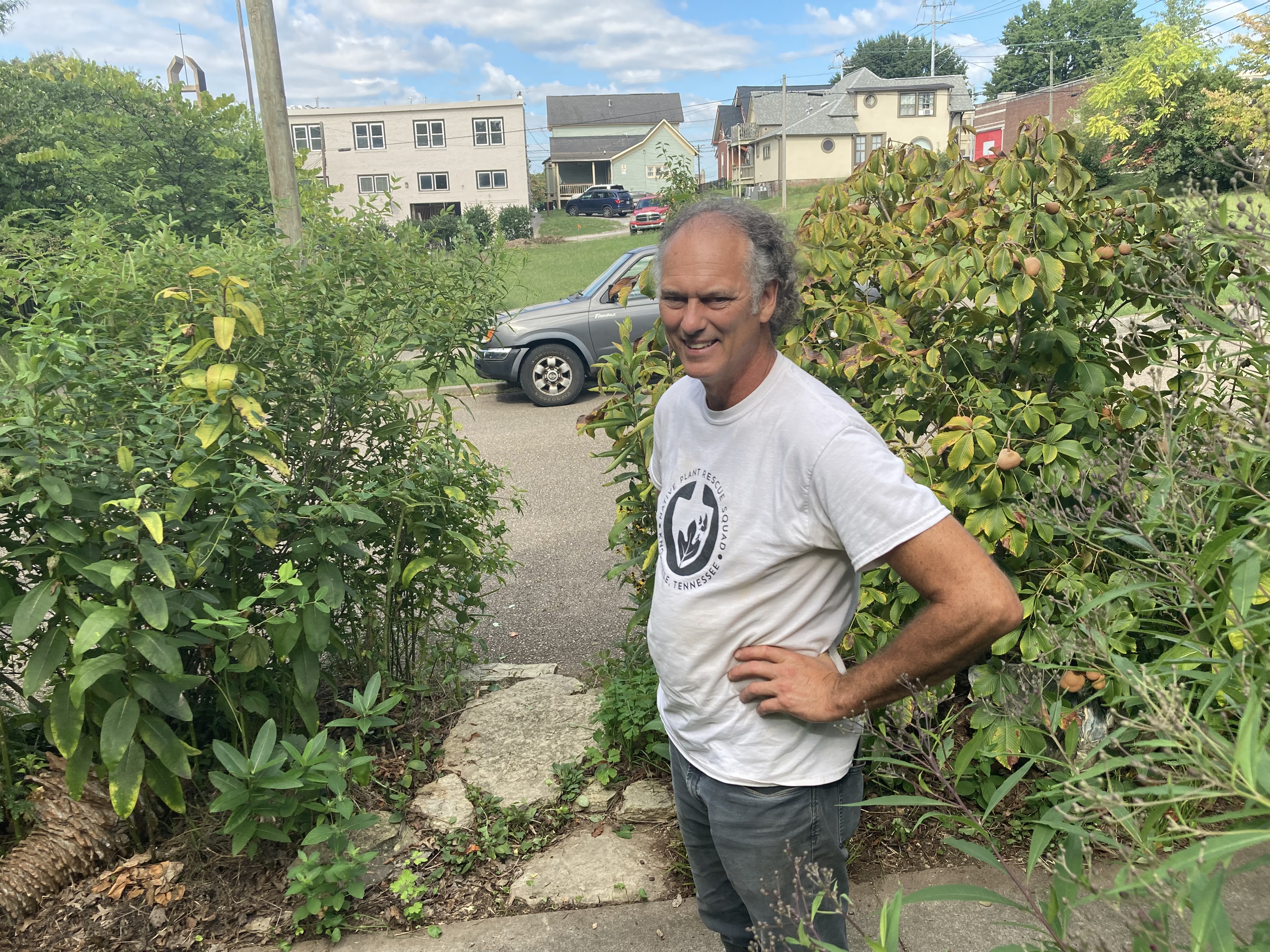 Gerry Moll is seen in the native garden of his home in the 4th and Gill neighborhood of Knoxville. Ben Pounds/Hellbender Press
People are restoring native plants on their properties. You should, too.
‘There are a lot of messes out there and this is something that you can do right at home that has a positive effect.’
KNOXVILLE — If you want to help native wildlife and attract it to your yard, plant some native plants and kick back on your porch and watch them grow. That’s a good place to start.
That’s the message from Native Plant Rescue Squad founders Gerry Moll and Joy Grissom.
People walking by Moll’s garden in the Fourth and Gill neighborhood off Broadway just north of the city center will see tall plants; not hedges or other foreign plants, but various short trees and native flowers. It looks like an explosion of growth on both sides of the sidewalk, but it’s not chaos.
- plant native species
- plant conservation
- plant rescue
- replace your lawn
- native species knoxville
- ben pounds journalist
- native grass
- native plant rescue squad
- gerry moll
- make your yard wild
- attract wildlife to your yard
- joy grissom
- 4th and gill knoxville
- basic habitat needs of wildlife
- garden for wildlife
- national wildlife federation
Hunters are invited to go whole hog on the Tennessee side of Big South Fork
Written by Thomas Fraser Wild hogs are seen rooting in a sensitive area. Hog season opens later this month in Big South Fork. National Park Service
ONEIDA — Big South Fork National River and Recreation Area this week announced regulations for those wanting to kill invasive wild hogs during the 2022 fall and winter seasons.
Most hog populations within the protected areas of BSF are believed to be present on the Tennessee side of the park, which spans the Kentucky border. Feral hogs have been present in East Tennessee for generations. They destroy local flora and fauna mainly by rooting in low-lying mountain and valley areas. They are especially fond of salamanders, many species of which are in grave decline. In Great Smoky Mountains National Park, hunters are regularly deployed to cull hogs throughout the park.
“The wild hog is an invasive exotic species that has a significant negative impact to native species and do a great deal of damage to farmlands and residential areas. The damage they cause threatens park resources including federally listed plants,” according to a release from the park service.
Smokies researchers make a formal acquaintance with a familiar salamander
 Jonathan Cox
Great news from the Smokies via Instagram!
The “salamander capital of the world” just gained a new member! Meet our 31st species: the Cherokee black-bellied salamander, or Desmognathus gvnigeusgwotli. Its species name means “black belly” in the Cherokee language. Scientists used genetics to find out that it is different from the other black-bellied salamander in the park.
This salamander is common throughout the park and is known for its extremely dark belly and hunting along the banks of streams. If you see a large, dark-bodied salamander with a flattened tail resting on a river rock or poking its head out of a streamside hole, it’s likely the Cherokee black-bellied!
Remember to always appreciate salamanders and other wildlife from afar. Many of our salamanders breathe through their skin. The oils on our hands can stress them out, disrupt their breathing or even spread infections. Please help us keep our salamanders slimy and avoid picking them up!
— Great Smoky Mountains National Park
 The Dust Bowl of the 1930s resulted in the displacement of tons of soil in the midst of a drought similar to the one that grips the Southwest today. Library of Congress
Dirt is far from just dirt. It’s a foundation for life.
This story was originally published by The Revelator.
Look down. You may not see the soil beneath your feet as teeming with life, but it is.
Better scientific tools are helping us understand that dirt isn’t just dirt. Life in the soil includes microbes like bacteria and fungi; invertebrates such as earthworms and nematodes; plant roots; and even mammals like gophers and badgers who spend part of their time below ground.
It’s commonly said that a quarter of all the planet’s biodiversity lives in the soil, but that’s likely a vast understatement. Many species that reside there, particularly microorganisms such as viruses, bacteria, fungi and protists, aren’t yet known to science.
- the revelator
- soil type
- soil moisture
- why is soil important
- drought
- soil microbe
- biodiversity
- soil microorganism
- nutrient cycling
- reading university
- climate change
- soil degradation
- plastic pollution
- genetically modified organism
- pesticide
- artificial fertilizer
- land use change
- compaction
- erosion
- convention on biodiversity
- soil biodiversity observation network
- global soil biodiversity initiative
- ecosystem research
- multidimensionality
- macroecology
- farm to fork strategy
- microbial transplants
- soil quality
- soil sealing
Southeast Tennessee ridges and rivers will benefit from $10m infusion of federal natural resource funding
Written by Casey Phillips A crimper is attached to the back of a tractor on a farm in the Sequatchie River Valley. A relatively recent agricultural technique, crimping has been shown to reduce farmers’ input costs and improve soil quality. Recently, USDA approved funneling $10 million into a six-county region of Southeast Tennessee. This money will fuel conservation-minded improvements for landowners, including lowering the cost to rent equipment like crimpers and subsidize the planting of cover crops to improve soil health and reduce sedimentation in nearby streams. Tennessee Aquarium
Targeted collaborative conservation will help local agricultural operations improve soil and water quality and protect aquatic life
CHATTANOOGA — Tennessee is as much a patchwork quilt of farms as it is an intricately woven lacework of streams and rivers. Soon, farmers and the aquatic life living alongside them will reap the benefits of $10 million in federal funds to support water-friendly agricultural improvements in the rolling uplands of the state’s southeastern corner.
The U.S. Department of Agriculture (USDA) approved the allocation of more than $197 million to support Regional Conservation Partnership Programs (RCPP) throughout the nation. These initiatives promote coordination between USDA’s Natural Resources Conservation Service (NRCS) and partnering organizations that are already engaged in conservation efforts.
- tennessee aquarium conservation institute
- tennessee aquarium
- tennessee department of environment and conservation
- farmland preservation
- land water preservation in se tennessee
- usda
- regional conservation partnership program
- ridge to river
- walden ridge
- sequatchie valley
- laurel dace
- natural resources conservation service
- chattanooga environment
- southeast tennessee environment
- tennessee endangered fish
- rcpp
That ain’t country: Activists protest proposed downtown tree removal in Knoxville
Written by Thomas FraserKNOXVILLE — People assembled at 6 p.m. Aug. 19 to speak for the trees threatened by development of an art installment at the half-acre Cradle of Country Music Park at the corner of Gay Street and Summit Hill Drive downtown.
The Harvey Broome Chapter of the Sierra Club organized the protest against the removal of five mature oak trees to make way for the sculpture and its base, which was originally commissioned to a New York City artist in 2018 and will cost the city $600,000, according to reporting from Compass. The online news outlet also reported Friday that Councilwoman Seema Singh has requested a pause in the project to determine whether there are alternatives to removing the trees.
More...
Coral, waste, water and weeds: Environmental vignettes from a UT journalism class
Written by Kaylee Walper, Mallory DeVore, Grace Ellison, Kathryn Kavanagh An empty Circle Park is seen in April. The park is adjacent to the UT School of Journalism and Electronic Media. Steven Bridges/University of Tennessee
Everybody has a story about the natural environment. Look around, and into yourself.
University of Tennessee journalism professor Mark Littmann asks students in his environmental writing class every semester to write short sketches about environmental issues they may observe during any given day. Such an assignment requires an almost poetical approach. Here's a sampling from spring semester.
A reef of bones
Huge schools of rainbow-colored fish weave through the brightly colored corals as Sir David Attenborough describes a day in the life of a fish on the television screen. A little girl is mesmerized; this is no Disney fantasy but real life. The nature shows on Animal Planet capture her imagination and soon mornings and afternoons are spent watching big cats and meerkats navigate the wild spaces they call home. She finds an instant favorite in the book “The Rainbow Fish” and celebrates turning four with a sparkly rainbow fish cake, hand decorated with sprees for rainbow scales. She insists someday she will swim among the fish in their magical undersea world.
 You might have to pay to park at some of these trailheads in Great Smoky Mountains National Park starting next year. These old trail badges are displayed in Fontana Village on the south side of the Smokies. Thomas Fraser/Hellbender Press
Smokies parking fees will generate $7 million in revenue for park infrastructure
GATLINBURG — Getting outside just got more expensive.
Great Smoky Mountains National Park officials announced Monday the park would proceed with plans for a $5/per day parking pass required of all cars staying in one spot for more than 15 minutes.
Weekly passes will be $15, and annual passes will be available for $40, according to a release from the park service. Fees will also increase $3 for backcountry and campground permits, meaning campers and backpackers will have to fork over $8 a night.
Falling trees accountable for very few deaths in Smokies, but they do happen
CITIZEN TIMES: Child killed by falling tree was a very rare twist of horrible fate
Karen Chavez of the Asheville Citizen Times wrote a great article on tree-related deaths in Great Smoky Mountains National Park and beyond following the death last week of a Georgia child killed by a falling tree as she was occupying a tent in Elkmont Campground.
She reports the death of the child was only the 11th tree-linked death in the national park’s history.
The first such death was reported in 1934, when a Civil Conservation Corps worker was killed. Tree-related deaths since are normally associated with roadways and hiking trails.
“‘Deaths related to falling trees or limbs account for about 2 percent of total recorded deaths in the park. It’s an incredibly rare and tragic occurrence and accounts for the first-ever fatality caused by a tree falling on a tent in park history,’” according to an interview Chavez had with park spokeswoman Dana Soehn.
Falling tree kills child in Great Smokies
ELKMONT — A 9-year-old girl died early Wednesday after a tree fell on a tent she was occupying in Great Smoky Mountains National Park.
The unidentified child was among a group of people camping in Elkmont Campground when the red maple, 2 feet in diameter, fell shortly after midnight and crushed the girl in her tent, according to the National Park Service.
The girl and her family had traveled to the national park from Georgia. Her father and two siblings weren’t injured, according to the park service.
Elkmont Campground remains open, but the family’s campsite and an adjacent campsite were temporarily closed.