

STEAM (19)
STEAM stands for Science, Technology, Engineering, Arts, and Mathematics. These are study subjects in which U.S. pupils are generally not at par with their peers in other developed countries. That reduces our chances of finding timely solutions to the dire crises that face our planet. It also diminishes the chances for the U.S. economy to remain competitive.
More people already know the STEM abbreviation. Some states and communities are now implementing STEM education programs. Many experts believe that Art education is important, too. Scientific studies have shown that STEM students and professionals who attended art classes are more likely to find crative solutions to new problems.
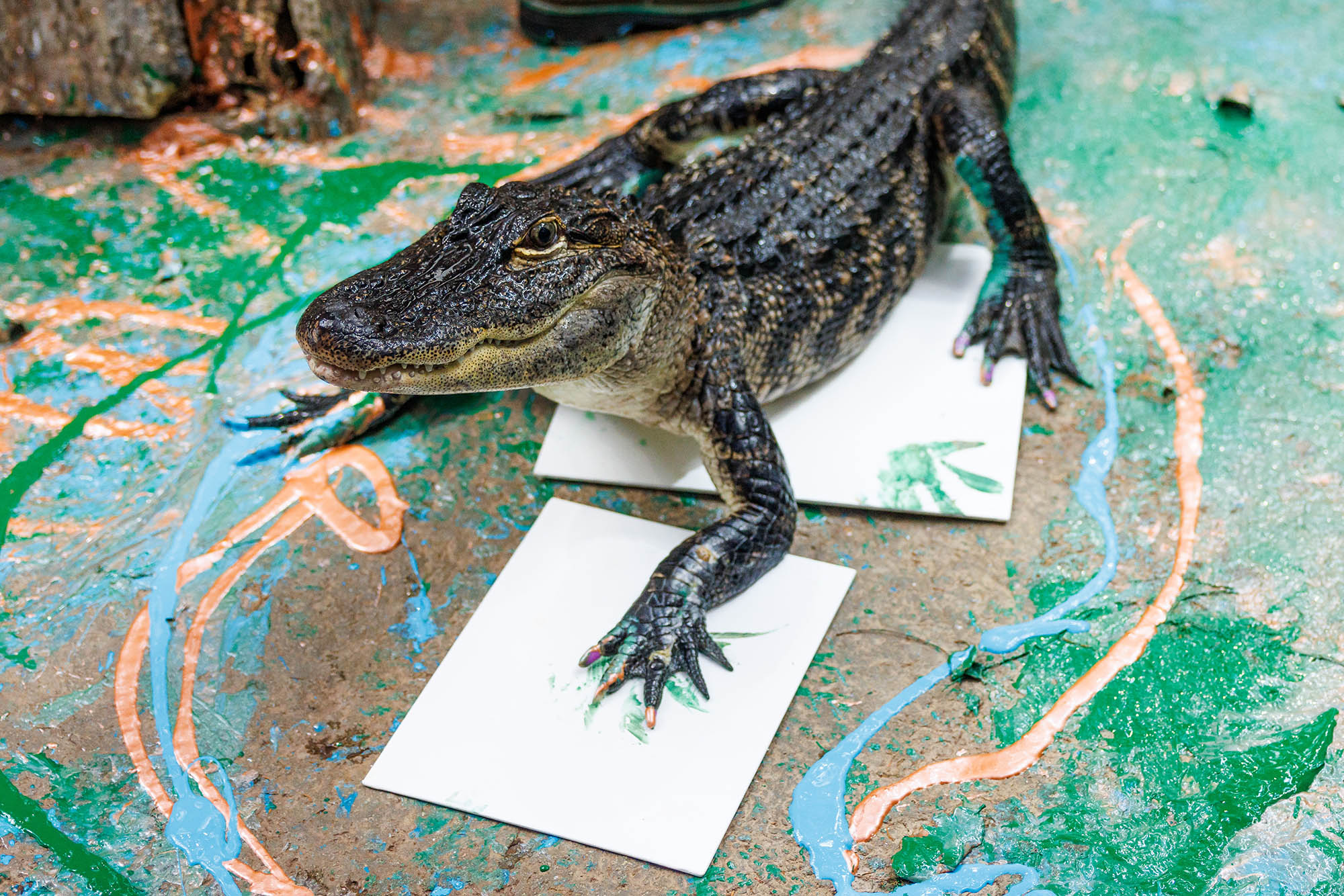 An American alligator (Alligator mississippiensis) paints art for the fall fundraising auction for the Tennessee Aquarium. The auction runs through Sept. 26. Tennessee Aquarium
Wildlife masterpieces mark an artistic autumnal fundraiser for the Tennessee Aquarium
CHATTANOOGA — While getting ready to tackle his next artistic masterpiece at the Tennessee Aquarium, Avior the red-ruffed lemur likes to take a few steps to center himself: languid naps in the sunshine, delicate nibbles of romaine lettuce, a resounding howl to focus his energy.
Only after these rituals are complete can this master of composition — a true “Lemur-nardo” da Vinci — begin putting paw and tail to canvas to create his next opus.
Avior’s latest triumph — made using non-toxic, animal-friendly tempura paint, naturally — is a 16-by-20-inch piece created in collaboration with his fellow lemurs and social media star Atlanta-based artist Andrea Nelson (TikTok video). Avior and Nelson’s masterwork is one of more than two dozen pieces of art made by aquarium animals now up for bid during the Tennessee Aquarium’s online fall fundraising auction. The auction will conclude at noon on Monday, Sept. 26.
Foreign freshwater jellyfish have been swimming among us since the 1930s
Written by Stephen Lyn Bales
Freshwater jellyfish: Here one year, gone the next.
KNOXVILLE — Paddling along the still water of Mead’s Quarry Lake you notice the air bubbles created by your oars. They are all around your canoe near the surface.
It’s a hot early September afternoon and the nearly transparent bubbles seem to take on a life of their own. You slow to watch and yes, they undulate, rising and falling in the pristine water of the abandoned marble quarry.
Air bubbles do not undulate!
Taking a clear plastic cup, you lean over the gunwale and scoop up one of the penny-sized bubbles to get a closer look.
Tentacles? Air bubbles do not have tentacles. What you are looking at is a freshwater jellyfish and the heat of late summer is its mating season. It’s a blossom of jellyfish as hundreds gather together near the water’s surface. They are commonly known as peach blossom jellyfish.
Citizen scientists are taking stock in Smokies, and the inventory keeps increasing
Written by Thomas Fraser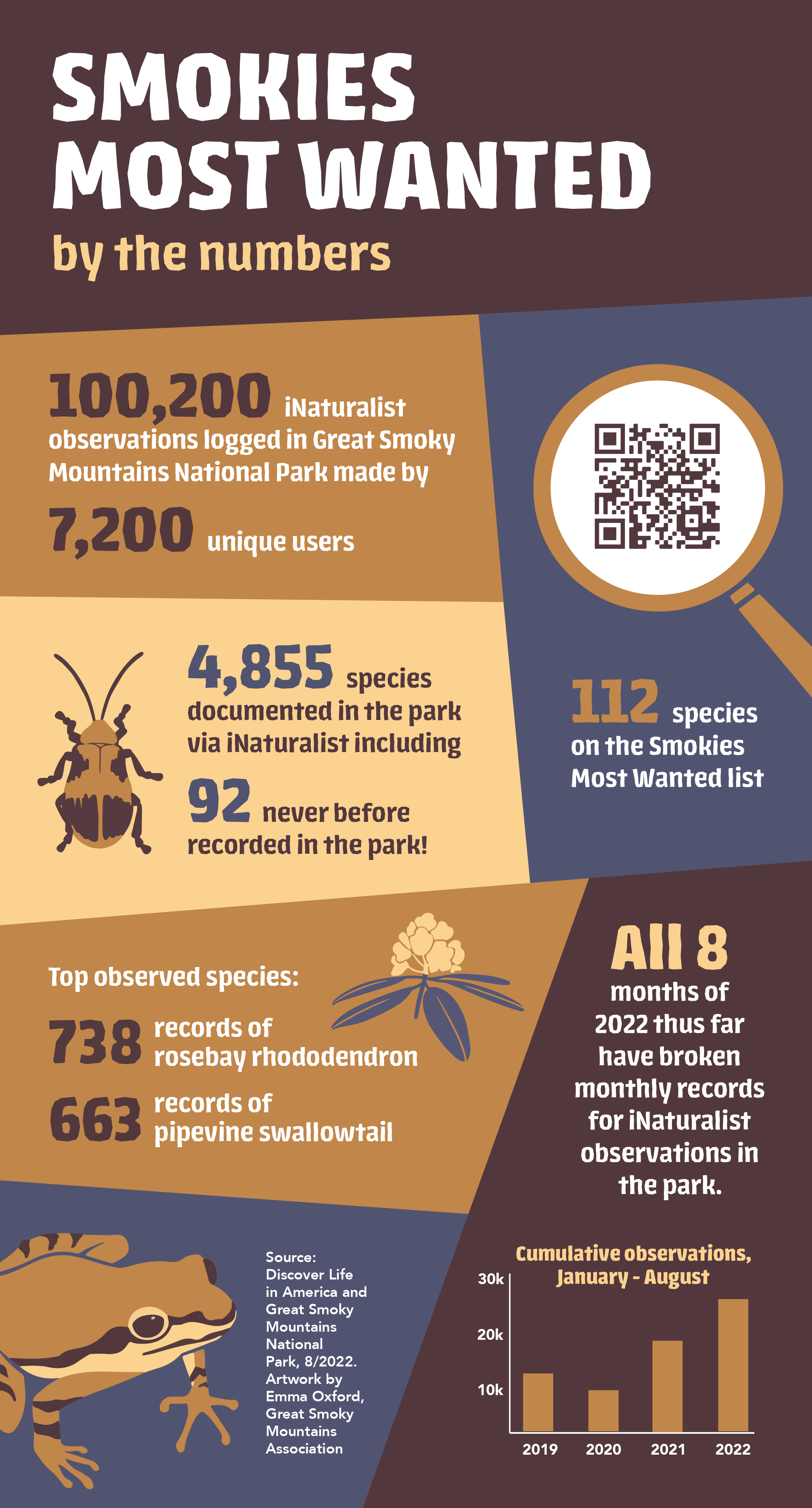
This story was provided by Great Smoky Mountains National Park.
Next demonstration on Thursday, Oct. 20
GATLINBURG — Great Smoky Mountains National Park is celebrating the success of a community science project led by nonprofit partner Discover Life in America (DLiA) called Smokies Most Wanted. The initiative encourages visitors to record life they find in the park through the iNaturalist nature app. DLiA and the park use these data points to map species range, track exotic species, and even discover new kinds of life in the park.
“iNaturalist usage in the Smokies has skyrocketed from just four users in 2011, to 3,800 in 2020, to now more than 7,100 users,” said Will Kuhn, DLIA’s director of science and research.
In August, the project reached a milestone, surpassing 100,000 records of insects, plants, fungi, and other Smokies life submitted through the app. Among them are 92 new species not previously seen in the park.
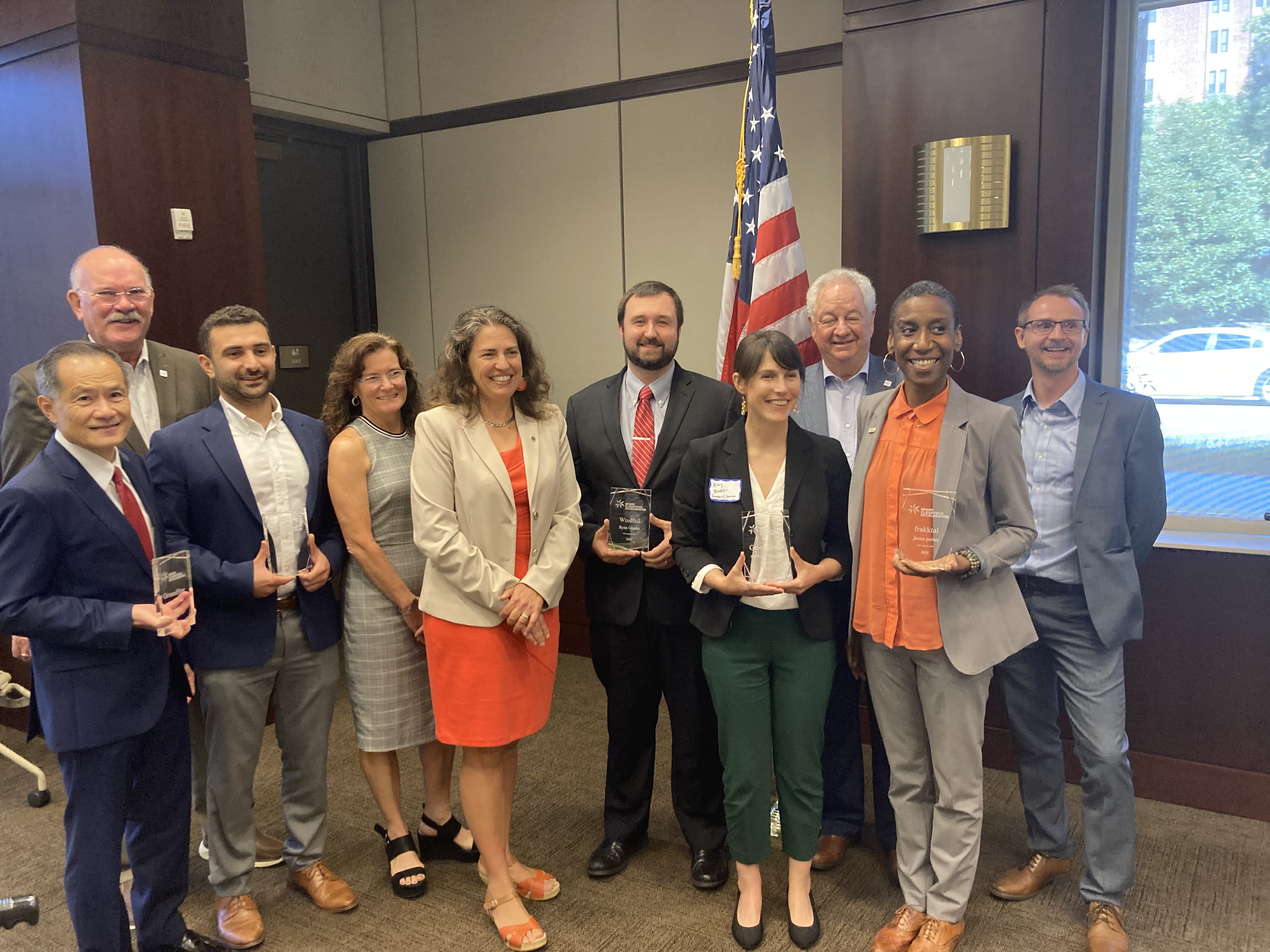 Spark CleanTech Accelerator participants join Knoxville Mayor Indya Kincannon during an Aug. 31 awards ceremony. Ben Pounds/Hellbender Press
Knoxville celebrates sustainable technology startups from across the country
KNOXVILLE — Leaders of start-up green businesses specializing in services and products ranging from carbon reduction to cleaning products and piping wrapped up some warp-speed lessons Aug. 31.
At the conclusion of the three-month Spark CleanTech Accelerator the leaders of environmentally sustainable businesses from across the country took home some awards and got a strategic pep talk from Knoxville Mayor Indya Kincannon.
“I’m very committed to all things green and sustainable,” she said. “Orange and green are complementary colors." She spoke of making Knoxville a “clean tech hub,” not just for Tennessee but internationally. She envisioned “a cleaner Knoxville and a cleaner world.”
- spark clean tech acclerator
- University of Tennessee
- university of tennessee research park
- knoxville sustainability
- knoxville mayor sustainability
- indya kincannon
- ut research foundation
- frakktal
- groundstar
- tom rogers ut
- launch tennessee
- ben pounds journalist
- windfall
- 3d printing knoxville
- green llama
- raev
Smokies researchers make a formal acquaintance with a familiar salamander
 Jonathan Cox
Great news from the Smokies via Instagram!
The “salamander capital of the world” just gained a new member! Meet our 31st species: the Cherokee black-bellied salamander, or Desmognathus gvnigeusgwotli. Its species name means “black belly” in the Cherokee language. Scientists used genetics to find out that it is different from the other black-bellied salamander in the park.
This salamander is common throughout the park and is known for its extremely dark belly and hunting along the banks of streams. If you see a large, dark-bodied salamander with a flattened tail resting on a river rock or poking its head out of a streamside hole, it’s likely the Cherokee black-bellied!
Remember to always appreciate salamanders and other wildlife from afar. Many of our salamanders breathe through their skin. The oils on our hands can stress them out, disrupt their breathing or even spread infections. Please help us keep our salamanders slimy and avoid picking them up!
— Great Smoky Mountains National Park
 The Dust Bowl of the 1930s resulted in the displacement of tons of soil in the midst of a drought similar to the one that grips the Southwest today. Library of Congress
Dirt is far from just dirt. It’s a foundation for life.
This story was originally published by The Revelator.
Look down. You may not see the soil beneath your feet as teeming with life, but it is.
Better scientific tools are helping us understand that dirt isn’t just dirt. Life in the soil includes microbes like bacteria and fungi; invertebrates such as earthworms and nematodes; plant roots; and even mammals like gophers and badgers who spend part of their time below ground.
It’s commonly said that a quarter of all the planet’s biodiversity lives in the soil, but that’s likely a vast understatement. Many species that reside there, particularly microorganisms such as viruses, bacteria, fungi and protists, aren’t yet known to science.
- the revelator
- soil type
- soil moisture
- why is soil important
- drought
- soil microbe
- biodiversity
- soil microorganism
- nutrient cycling
- reading university
- climate change
- soil degradation
- plastic pollution
- genetically modified organism
- pesticide
- artificial fertilizer
- land use change
- compaction
- erosion
- convention on biodiversity
- soil biodiversity observation network
- global soil biodiversity initiative
- ecosystem research
- multidimensionality
- macroecology
- farm to fork strategy
- microbial transplants
- soil quality
- soil sealing
At Gray Fossil Site, paleontologists let the bone-crushing dog out
Written by East Tennessee State University Illustration of the Gray Fossil Site bone-crushing dog, recently determined to have been active in the ancient Southern Appalachians. Mauricio Anton via ETSU
Discovery of ancient ambush predator is one of few large carnivores found at East Tennessee paleontological site
JOHNSON CITY — Overseen by the Don Sundquist Center of Excellence in Paleontology at East Tennessee State University, researchers have studied the Gray Fossil Site for over 20 years. They have identified many extinct animal and plant species of the Pliocene epoch that lived there some 5 million years ago. While large herbivores are well known from the site, large predators are relatively uncommon, so far including only alligators and scarce remains of at least one sabertooth cat.
Now, there’s a new predator on the scene.
A recent study published in the Journal of Paleontology describes a single right humerus (upper arm bone) of an animal named Borophagus, a member of an extinct group more commonly called bone-crushing dogs. The animal is so named for its powerful teeth and jaws. This is the first evidence of any animals in the dog family from the Gray Fossil Site.
The research was conducted by Emily Bōgner, a doctoral student at the University of California, Berkeley, and alumnus of ETSU’s paleontology master’s program, and Dr. Joshua Samuels, associate professor in the ETSU Department of Geosciences and curator at the Gray Fossil Site and Museum.
An under-appreciated Black scientist pioneered the modern study of bees and other insects
Written by Edward D. Melillo Zoologist Charles Henry Turner was the first scientist to prove certain insects could remember, learn and feel. Charles I. Abramson via The Conversation
Charles Henry Turner concluded that bees can perceive time and develop new feeding habits in response
This story was originally published by The Conversation. Edward D. Melillo is a professor of history and environmental studies at Amherst College.
On a crisp autumn morning in 1908, an elegantly dressed African American man strode back and forth among the pin oaks, magnolias and silver maples of O’Fallon Park in St. Louis, Missouri. After placing a dozen dishes filled with strawberry jam atop several picnic tables, biologist Charles Henry Turner retreated to a nearby bench, notebook and pencil at the ready.
Following a midmorning break for tea and toast (topped with strawberry jam, of course), Turner returned to his outdoor experiment. At noon and again at dusk, he placed jam-filled dishes on the park tables. As he discovered, honeybees (Apis mellifera) were reliable breakfast, lunch and dinner visitors to the sugary buffet. After a few days, Turner stopped offering jam at midday and sunset, and presented the treats only at dawn. Initially, the bees continued appearing at all three times. Soon, however, they changed their arrival patterns, visiting the picnic tables only in the mornings.
 Jim Hill Fellow for Conservation Breelyn Bigbee holds a viewing window with a logperch in Long Swamp Creek while conducting fieldwork in search of bridled darters near Jasper, Georgia. Tennessee Aquarium
Tennessee Aquarium fellowships bring minorities into the science space
CHATTANOOGA — Never let it be said that all summer jobs are created equal.
Squatting on his heels to dangle the flexible hose of an environmental DNA pump into a briskly flowing North Georgia stream, the last few weeks have been anything but ordinary for Spencer Trimpe. With the pump’s droning motor steadily collecting a sample of water to filter out genetic traces of the stream’s inhabitants, he doesn’t bother holding back a smile.
A lanky junior biology major from Thomas More University, Trimpe is one of two students selected as part of the Tennessee Aquarium’s George Benz Aquatic Ecology Fellowship. Instead of manning a cash register or waiting tables this summer, he’s assisting freshwater scientists from the Tennessee Aquarium Conservation Institute with a variety of research projects.
In throwback to early naturalist techniques, Big Camera! helps us picture plants under the sun
Written by Ben Pounds![big camera]() Donna Moore and Anna Lawrence are pictured at a Big Camera! event in May at Ijams Nature Center in South Knoxville. Ben Pounds/Hellbender PressLessons in early and enduring photo techniques are an organic way to spread the arts and cultivate love of nature
Donna Moore and Anna Lawrence are pictured at a Big Camera! event in May at Ijams Nature Center in South Knoxville. Ben Pounds/Hellbender PressLessons in early and enduring photo techniques are an organic way to spread the arts and cultivate love of nature

KNOXVILLE — Donna Moore and Anna Lawrence showed people how to take photos with the sun.
The method, demonstrated this spring at Ijams Nature Center, involved putting one or more leaves on photo paper and spraying it with two sprays. One spray contained lemon and water. The other contained water with vinegar.
Children then placed these leaves on wet photo paper in the sun. The sun’s light gives a permanent impression of the leaf on the paper.
More...
 A child defends an elaborate stick fort at Ijams Natural Playscape, which opened this week at the South Knoxville nature center. Ijams Nature Center
New Ijams playground reconnects kids with neighborhood woods, forts and creeks of yore
KNOXVILLE — Ijams Nature Center officially opened a portal into pure childhood beast mode this week.
The Ijams Nature Playscape at Grayson Subaru Preserve is specifically designed for young children to play in a creek, climb hills, dig, build, crawl and engage with nature in an organic, unstructured way. The new space features a large nest, tunnels, log steps and different rooms to play in.
“For generations, many of us had the opportunity to roam and play in the woods, empty lots and fields that surrounded our homes and neighborhoods,” Ijams Executive Director Amber Parker said. “We remember the freedom we had to use our imagination, test ourselves and become a part of the natural landscape, at least until we were called home for dinner.”
- ijams nature center
- ijams educational program
- ijams natural playscape
- kid at ijams
- ijams activity
- cindy hassil
- grayson at ijams
- knoxville outdoor activities for kid
- is knoxville sustainable
- knoxville good place for kid
- childhood outdoor education
- south knoxville
- amber parker
- grayson subaru knoxville
- grayson nature
- is grayson sustainable?
- ijams history
- playgrounds knoxville
- playgrounds near knoxville downtown
- natural playground
- importance of children playing in nature
- nature daycamp knoxville
 Tennessee Aquarium Director of Hospitality and Marketing Meredith Roberts and her daughter Lucy release a juvenile lake sturgeon during an Earth Day event on the Chattanooga riverfront. Tennessee Aquarium
Tennessee Aquarium releases endangered sturgeon on a fin and a prayer
CHATTANOOGA — Lake sturgeon are living fossils.
They are dinosaur fish. They have no scales. They are protected by a tough skin with boney plates, and are unchanged for millennia. They are part of a widespread related group of fish, with 23 species worldwide, and are an endangered species in Tennessee.
Tennessee Aquarium staff released some of these dinosaurs into the Tennessee River here on Earth Day, observed this year on April 22. Aquarium staff were joined by 30 students from Calvin Donaldson Elementary School and the public to release 65 juvenile lake sturgeon into the Tennessee River at Chattanooga’s Coolidge Park.
 Martha, Elizabeth, Mary, and Josephine Ijams (from left) are seen in this 1923 photo. The girls were active in scouting and became accomplished naturalists early in life. Ijams Nature Center
Help give thanks across history to founders of the South Knoxville nature center and celebrate the addition of 3 acres
Cindy Hassil is a writer for Ijams Nature Center.
KNOXVILLE When H.P. and Alice Ijams purchased 20 acres of land along the Tennessee River in 1910, they couldn’t have known their family would still be contributing to the legacy that would become the 318-acre nonprofit Ijams Nature Center more than a century later.
Ijams Nature Center will celebrate the contributions of the Ijams family and dedicate three acres of land recently donated to the nature center by H.P. and Alice’s granddaughter, Martha Kern, at 10 a.m. Thursday, April 28. The public is invited.
Maybe we should call it Ocean Day
Written by Wolf NaegeliBest Earth Day feature: We still know so little about so much that is vital to life on our planet
CBS News — Stunning midwater creatures of the deep sea
You have to endure a half-minute commercial to see this 6-minute report on the fascinating footage captured by a high-tech marine science project of the Monterey Bay Aquarium.
Make sure to turn on full-screen viewing, if you can. Have you ever seen a bloody belly comb jelly?
We think you’ll agree it’s the most worthwile video you watched today.